Curatorial Note
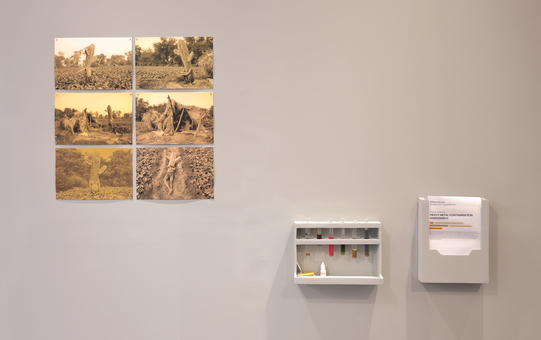
In the peri-urban landscape of Ranholla, West Delhi, fragmented plots that hesitantly recall the region’s once vast agrarian fields seem lush and green from a distance. They are filled with rows of spinach, brinjal and other fast growing crops that aid the demands of consumption of the sprawling population of Delhi. Alongside these fields run the Najafgarh drain, which carries sewage and industrial effluents from surrounding unauthorized factories, the only source of water for cultivation. As a result, the soil and its produce remain contaminated, especially with heavy metals. The reliance on this water source poses dire challenges to the health of the farmers and consumers alike in this interdependent urban eco-system and economy.
The small-scale, migrant farmers from Uttar Pradesh, Bihar and Jharkhand that sustain such cultivation remain largely apart in the imagination of communal agrarian movements. They cultivate land leased under the Bataiya sharecropping system, commit a large share of the produce to the land owners, have no say in what is grown on these lands despite the inter-generational knowledge that they carry with them to the outskirts of the metropolis. They receive no infrastructure or means to support their livelihood. Systemic oversight denies them rights as political subjects and legitimacy as farmers, and continues to entrench the health and safety hazards posed by their circumstances.
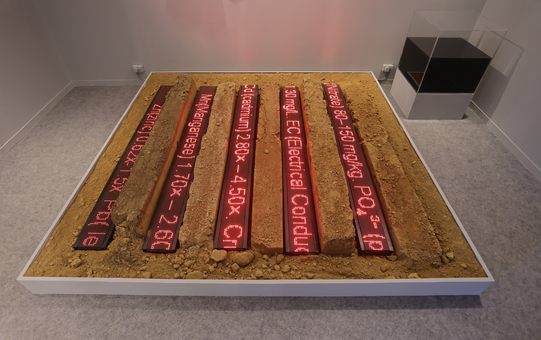
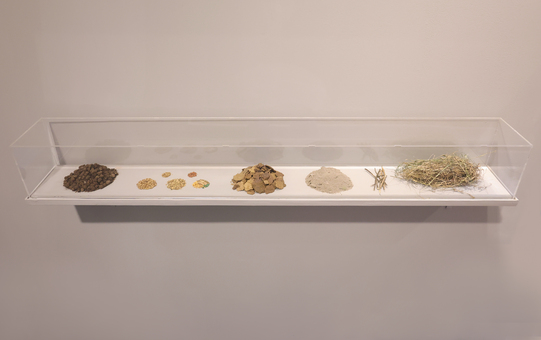
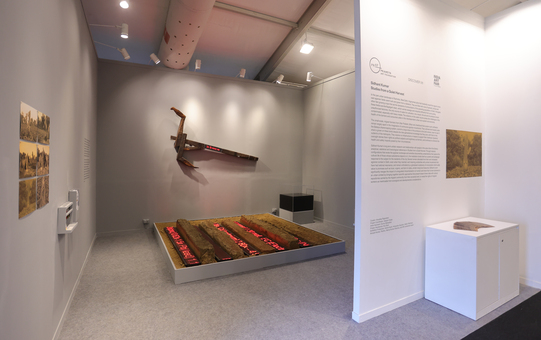
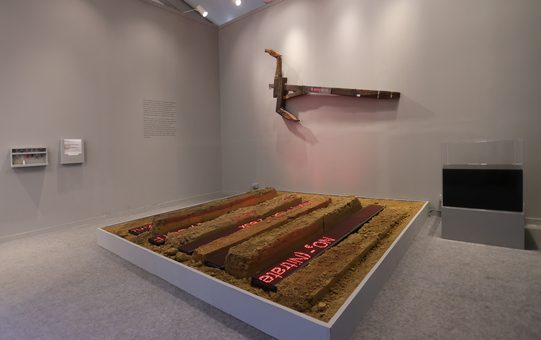
Sidhant Kumar’s long-term artistic research and relationships with people in this area inform the literary, analytical, statistical and toxicological references in Studies from a Quiet Harvest. Through material configurations that evoke the agrarian landscape and sensitive performance-based presentations that capture the cultural life of those whose subsistence depend on it, the installation lends itself as a poetic and pedagogic response to the subject for the residents of the city. Several remain alienated from their own immediate agrarian context in Delhi, even when they maintain well-meaning solidarities with protest movements that have had national resonance, and remain enthralled by a globalised vocabulary of consumption which adds value to promises such as local, organic, and farm to table, amidst rising food insecurity. Sidhant’s work significantly merges the impact of unregulated industrialisation on human and more than human elements in an urban context by bringing together scientific approaches that present lesser known data with cultural repositories carried by the migrant community from their ancestral land, to reveal the rights of migrant workers as inextricable from ecological and developmental considerations.
- Text by Anushka Rajendran